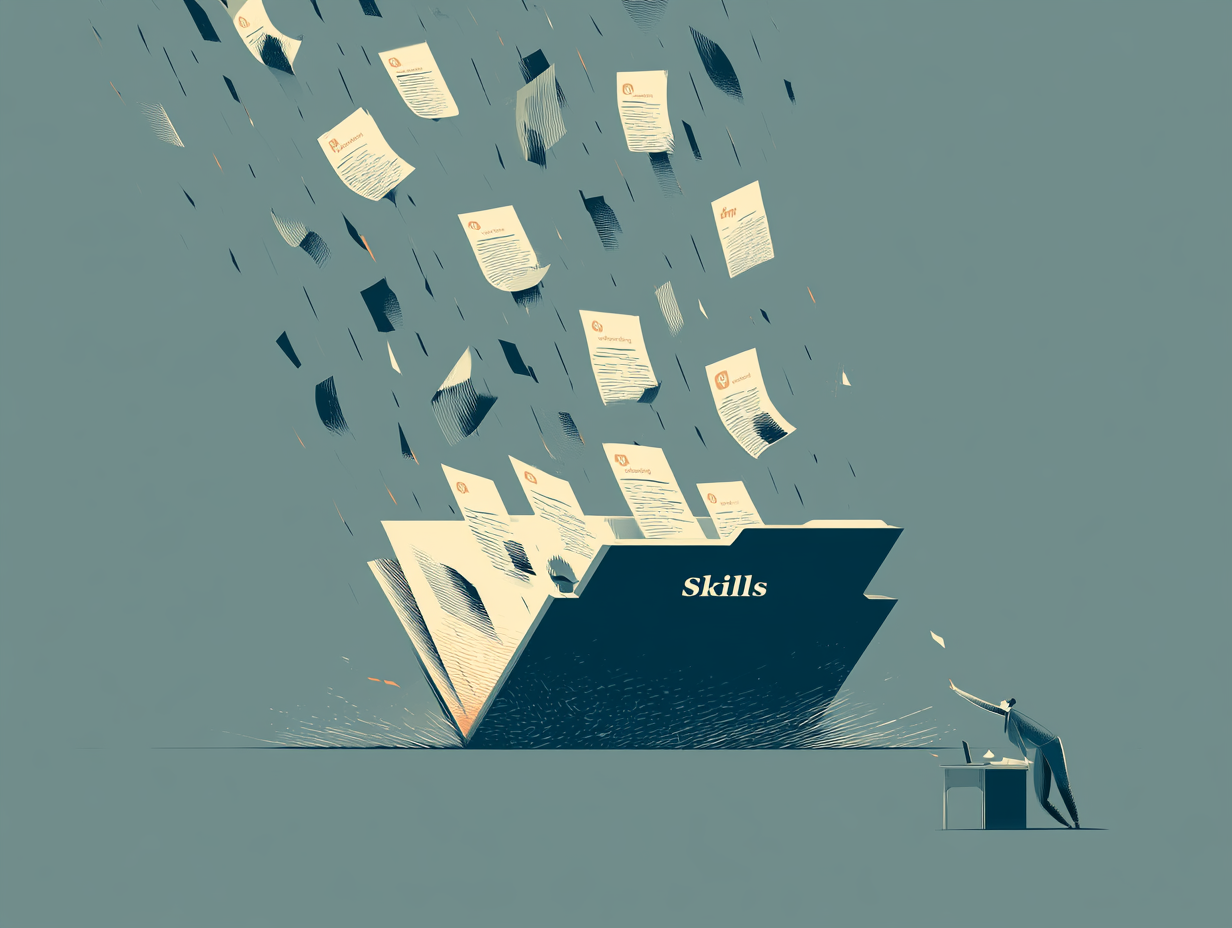
Your Style Guide Just Became an API
Figma opened the canvas to agents. Content design systems are plugging into AI tools. And a live demo in NYC is showing content designers how to own the system that governs what every agent ships. The person who owns the source of truth wins.
Yuval Keshtcher
April 14, 2026 · 5 min read
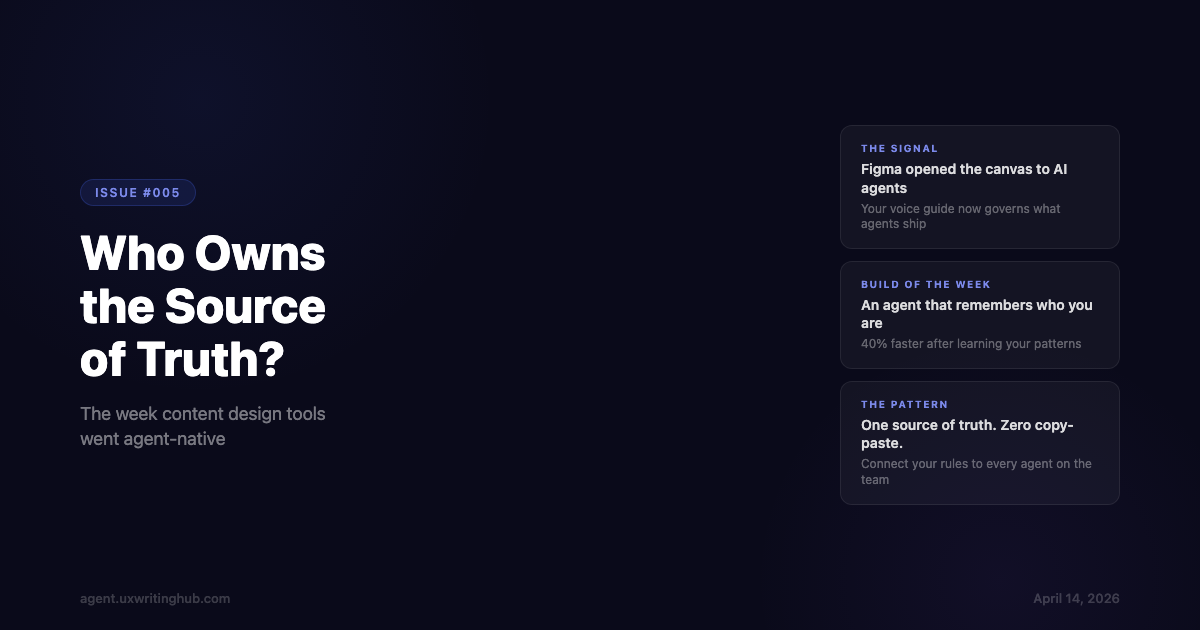
The Signal
Something shifted this week and I need you to pay attention.
Figma opened the canvas to AI agents. Not just reading — writing. AI agents can now create frames, insert components, update text layers, and pull from your design system. Directly. In your Figma files.
→ Agents, Meet the Figma Canvas
That means the person who defines the content rules now defines what agents produce inside Figma. Not engineers. Not product managers. The person who owns the voice guide.
Same week, content design systems started plugging directly into AI coding tools. Style guides, terminology banks, voice rules — they're no longer PDFs nobody reads. They're live connections that agents check before they write a single word of UI copy.
And on April 22, Jessica Ouyang is running a live session in NYC — "Agentic Workflows for UX Writers" at BrainStation. Not a framework talk. A real demo of how content designers can own a system that governs what everyone on the team ships.
Here's the thing nobody's saying out loud.
The old workflow was: write copy in a doc. Paste into Figma. Argue in Slack about what got changed. Repeat until you quit.
The new workflow: you build the system once, and every agent on your team reads it before it writes anything.
That changes who matters on a product team. The person who owns the content system becomes the person who governs every AI output. The person who doesn't becomes the person agents route around.
This isn't about learning a new tool. It's about whether your expertise becomes the foundation — or the bottleneck.
Build of the Week
NousResearch shipped Hermes Agent v0.8.0 on April 8. Open source. 32,000+ GitHub stars. And it does something I haven't seen before.
It remembers who you are.
Most agents start from zero every session. Hermes doesn't. It learns your patterns, your preferences, your writing shortcuts — and gets better every time you use it. Not because you wrote a better prompt. Because it watched how you work.
The number: agents that learned from their users completed research tasks 40% faster than fresh ones. Same agent. Same task. The only difference was time spent together.
What I'd steal from this: the expectation. Your agent should get sharper the longer you work with it. If it forgets everything between sessions, you're training a new intern every morning.
The Stack
Claude Code /team-onboarding — Brand new (April 10). It watches how you use Claude Code for 30 days, then writes a ramp-up guide for your teammates. Your actual workflows. Documented without you lifting a finger. → Changelog
datasette-enrichments-llm — Run a prompt against every row in a spreadsheet or database. Imagine batch-checking 2,000 product descriptions for tone consistency. In minutes. → Simon Willison's blog
Gemma 4 Audio — Transcribe audio on your laptop. No cloud. No API costs. Turn user research interviews into structured notes without uploading anything. → How to run it
CrewAI v1.10.1 — A framework for building teams of AI agents that work together. One researches. Another drafts. Another edits. 12 million tasks daily. The most beginner-friendly way to build a content pipeline. → Comparison guide
The Pattern
Make your content rules the source of truth for every agent on your team.
Instead of pasting your style guide into every prompt (which breaks the moment someone forgets, or uses a different tool, or spins up a new agent), connect your rules to the agents directly.
- Put your content rules in one place. A structured style guide — terminology, voice, formatting rules, words you never use. Not a Google Doc. A system your tools can read.
- Connect it to your AI tools. Most content design platforms and AI coding tools now support a protocol that lets agents pull your rules automatically. One connection. Every agent reads the same source.
- Test it. Ask an agent to write a UI string. Watch it check your rules before generating. That's the moment it clicks.
→ Figma explains how this works
The result: one source of truth. Zero copy-paste. Every agent on the team writes like someone who actually read the style guide. Which is more than most humans do.
Quick Links
Bluesky built a Claude-powered AI agent for custom feeds. 125K users blocked it in 48 hours. The backlash is the story: people want control over AI, not AI controlling their feed. → TechCrunch
Config 2026 speakers announced. Figma's biggest conference (June 23-25, SF). Anthropic's content design lead is on the lineup. Content + AI = center stage. → Speaker lineup
Deloitte Tech Trends 2026 puts agentic AI at the top. Your boss's boss now has a slide about AI agents. That's your opening. → Deloitte Insights
SAP is running an AI Agent hackathon this month. When SAP runs agent hackathons, the "is this real?" phase is done. → SAP Community
Stop writing guidelines. Start building systems.
2 hours, live online. Set up Claude Code, build a voice & tone system, and ship a real content platform your team can use the next day. No coding experience needed.
If you don't leave with a working tool, ask for a refund.
Enjoyed this?
Get posts like this delivered to your inbox every Tuesday. Free.